Asst. Prof. Phorramatpanyaprat Tongprasong, Ph.D., FHEA UKPSF
@mustland
“A shared vision turns ideas into impact.”
- Planning = more than just documents
- It is conversation + creativity + collaboration
- Digital tools make planning interactive and inclusive
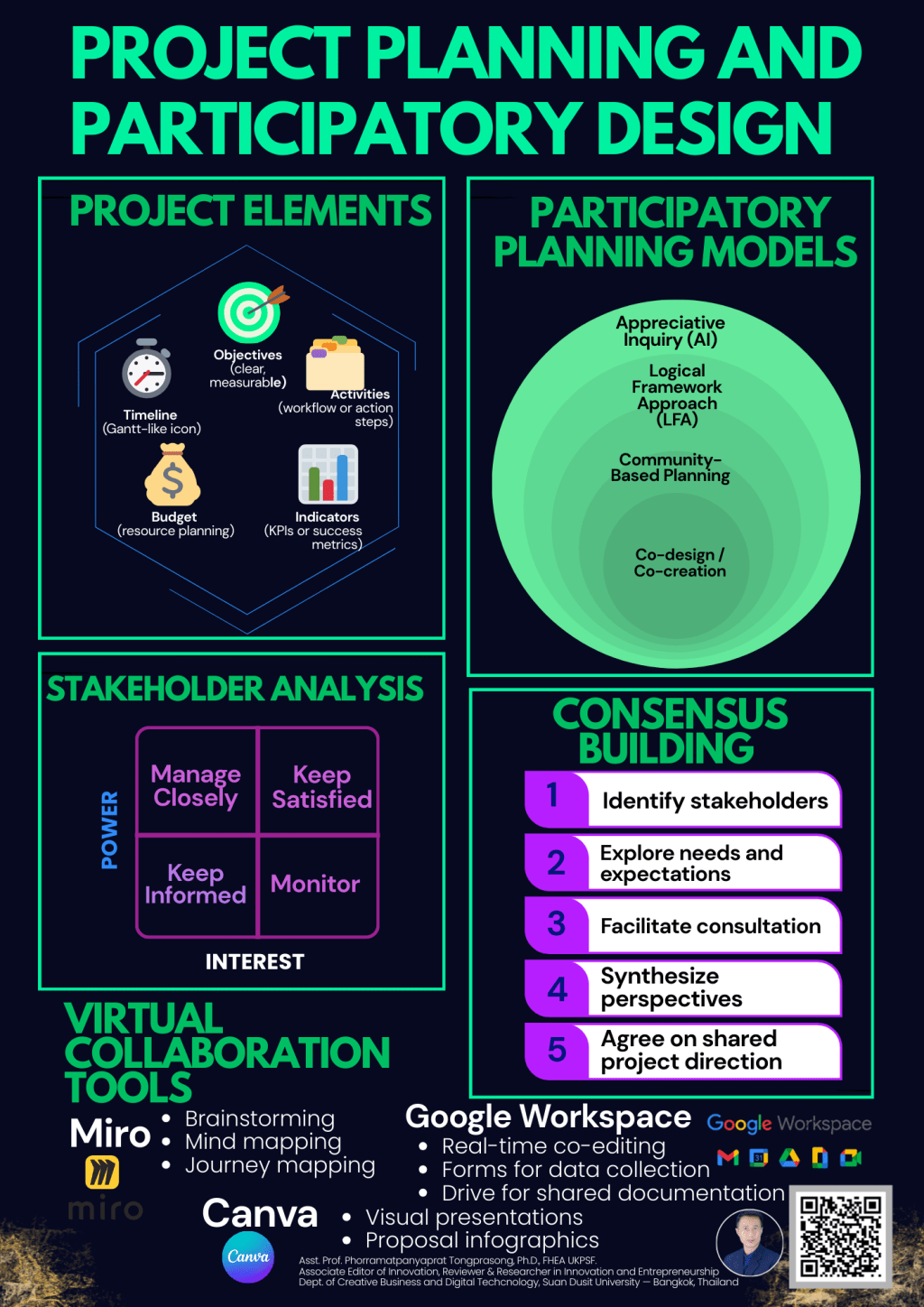
Four Elements of a Project
1. Objectives
What change are we trying to create?
- Use SMART goals
2. Activities
Steps that make the objectives happen
- Organized in WBS
3. Indicators
How we know we’re successful
- Numbers • Results • Behaviour
4. Budget
Resources needed for each activity
- Must align with sustainability
- Objectives → Activities → Indicators → Budget
- All linked to show a cause–effect pathway
What is Participatory Planning?
Easy Definition:
Planning with people, not for people.
Key Features:
- Inclusive
- Shared ownership
- Community-driven
- Builds trust
Stakeholder Analysis 3 steps illustrated:
1️. Identify 👥Who is involved? (beneficiaries, partners, sponsors)
2️. Map🗂️ Power vs. interest grid
3️. Engage 📅 How and when to involve each group
Consensus Building
Simple explanation:
- Different perspectives → One shared direction
- Needs trust + communication + negotiation
- Especially important for virtual teams
Digital Tools for Collaboration
Miro — Brainstorm, map ideas 🧠🟨
Canva — Design visuals together 🎨
Google Workspace — Docs, Sheets, Meet 🗂️📁
Summary
- Planning = logical + participatory
- Clear structure improves effectiveness
- Engagement builds ownership
- Digital tools make teamwork faster, clearer, and more inclusive
 @Mustland
Leave a comment