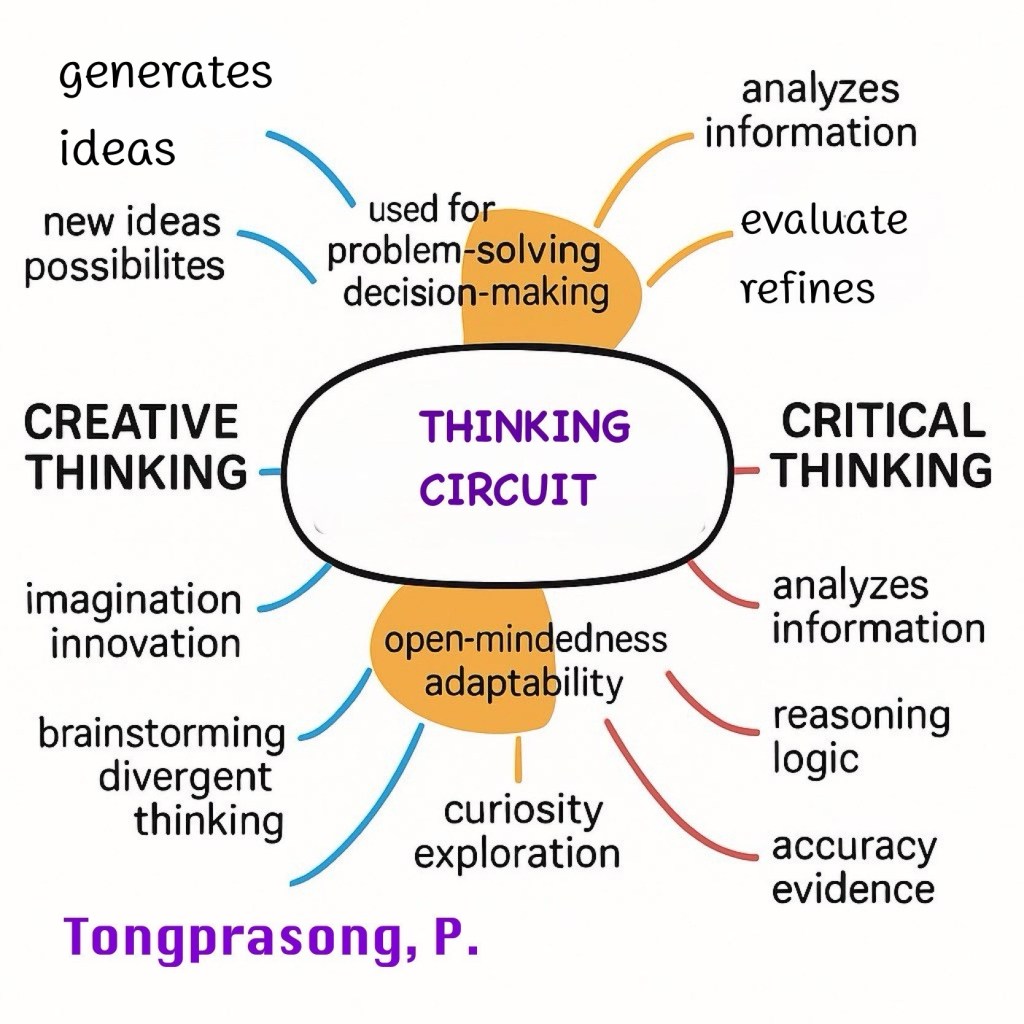
Thinking Circuit refers to a systematic and continuous thinking process structured as a cycle comprising stages of information intake, processing, analysis, and decision-making. This process is interconnected with feedback mechanisms to continually improve and enhance the quality of thinking.
It enables the thinker to effectively link new knowledge with prior experiences, resulting in creative and sustainable problem-solving across various contexts.
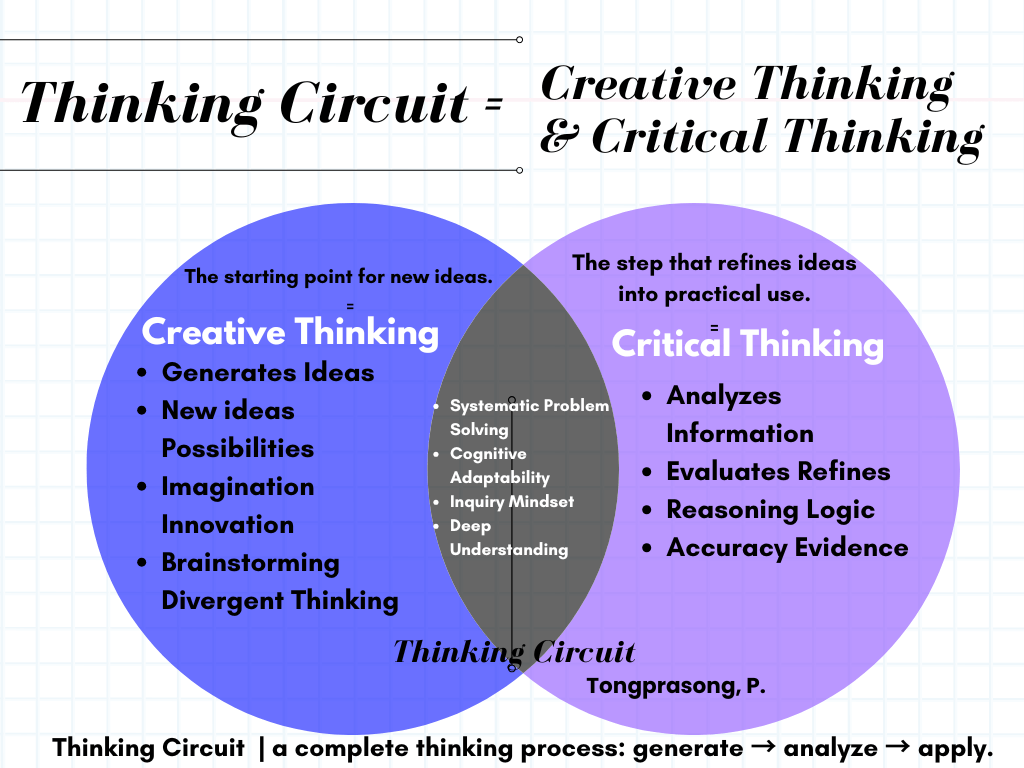
Figure 1 : Thinking Circuit: Combination of Creative & Critical Thinking
Creative Thinking and Critical Thinking are essential 21st-century skills that are closely related and mutually reinforcing. Creative Thinking focuses on generating new ideas, possibilities, and novel solutions, while Critical Thinking emphasizes analyzing, evaluating, and refining those ideas to ensure they are logical, clear, and practical. The integration of these two skills produces a comprehensive and effective problem-solving process. This is supported by the OECD report (2025), which identifies the ability to generate, evaluate, and improve ideas as key components of high-quality creative thinking.
Recent studies have underscored the importance of integrating both skills. For instance, Shaber et al. (2025) investigated university students and found a significant positive correlation between Creative Thinking and Critical Thinking, recommending the parallel development of both skills. Similarly, Kuscu & Erdogan (2024) studied mathematics teachers before instruction and observed high levels of both skills, a moderate positive correlation, and that Creative Thinking predicted 23% of the variance in Critical Thinking.
Moreover, Thornhill-Miller et al. (2023) included Creative Thinking and Critical Thinking as part of the “4Cs,” alongside Communication and Collaboration—skills necessary for learning and working in the digital society of the 21st century. The integration of these skills not only helps learners think creatively and critically but also supports the development of other competencies essential for success in a rapidly changing digital world.
Key Characteristics of the Thinking Circuit
- It is an iterative thinking process involving continuous self-regulation.
- Its main components include input (information reception), processing, analysis and synthesis, decision-making, and feedback.
- It supports both creative and critical thinking by balancing deep insights and diverse perspectives.
- It promotes continuous learning and ongoing development.
Thinking Circuit หมายถึง กระบวนการคิดที่เป็นระบบและต่อเนื่องในลักษณะวงจรซึ่งประกอบด้วยขั้นตอนการรับข้อมูล การประมวลผล การวิเคราะห์ และการตัดสินใจ โดยกระบวนการเชื่อมโยงกับการให้ข้อมูลป้อนกลับ (feedback) เพื่อปรับปรุงและพัฒนาคุณภาพของความคิดอย่างต่อเนื่อง ซึ่งทำให้ผู้คิดสามารถเชื่อมโยงองค์ความรู้ใหม่กับประสบการณ์เดิมอย่างมีประสิทธิภาพ ส่งผลให้เกิดการแก้ปัญหาอย่างสร้างสรรค์และยั่งยืนในบริบทต่าง ๆ
ลักษณะสำคัญของ Thinking Circuit
- เป็นกระบวนการคิดแบบวนซ้ำ (iterative process) ที่มีการปรับปรุงตนเอง (self-regulation)
- องค์ประกอบหลัก ได้แก่ การรับรู้ข้อมูล (input) การประมวลผลข้อมูล (processing) การวิเคราะห์และสังเคราะห์ (analysis and synthesis) การตัดสินใจ (decision-making) และการสะท้อนผลลัพธ์ (feedback)
- สนับสนุนการคิดเชิงสร้างสรรค์และเชิงวิพากษ์ โดยการรวมข้อมูลเชิงลึกและมุมมองหลากหลายอย่างสมดุล
- ส่งเสริมการเรียนรู้และการพัฒนาอย่างต่อเนื่อง (continuous learning and improvement)
เมื่อพิจารณา แผนภาพเวนน์ (Venn Diagram) ที่ใช้เปรียบเทียบและแสดงความสัมพันธ์ระหว่าง Creative Thinking (การคิดเชิงสร้างสรรค์) และ Critical Thinking (การคิดเชิงวิพากษ์) โดยมีการแบ่งข้อมูลออกเป็น 3 ส่วนสำคัญ (ภาพ 1) ดังนี้
1. ส่วนเฉพาะของ Creative Thinking (วงกลมสีฟ้าซ้าย)
- Generates Ideas
- New Ideas Possibilities
- Imagination Innovation
- Brainstorming Divergent Thinking
≫≫≫≫≫
- มุ่งเน้น การสร้างไอเดียและความเป็นไปได้ใหม่ ๆ
- สนับสนุน จินตนาการและนวัตกรรม
- ใช้วิธีการ ระดมสมอง และ คิดแบบแตกแขนง (divergent thinking)
- ให้ความสำคัญกับ ความแปลกใหม่ ความเสี่ยง และความกล้า
- มองจากหลายมุมมอง และหาทางออกที่ไม่ปกติทั่วไป
- เกิดขึ้นแบบ ทันทีและยืดหยุ่น
- ใช้ในงานศิลปะ การแก้ปัญหา และการสร้างแนวคิด (ideation)
📌 สรุป เน้น “การผลิตไอเดีย” แบบไม่จำกัดกรอบ
2. ส่วนเฉพาะของ Critical Thinking (วงกลมสีม่วงขวา)
- Analyzes Information
- Evaluates Refines
- Reasoning Logic
- Accuracy Evidence
≫≫≫≫≫
- มุ่งเน้น การวิเคราะห์และประเมินข้อมูลอย่างถูกต้องประกอบเหตุผล
- ใช้เหตุผลและแสดงการคิดเชิงโครงสร้าง
- ให้ความสำคัญกับ ความแม่นยำ ความน่าเชื่อถือ และความสอดคล้องเชิงตรรกะ
- ตรวจสอบ สมมติฐานและอคติ
- ตัดสินใจบนพื้นฐานของ หลักฐานและเหตุผล
- แสดงลักษณะ ตั้งคำถามและสงสัยประกอบเหตุผล
- ใช้ใน การตัดสินใจ การวิเคราะห์ และการแก้ปัญหา
📌 สรุป เน้น “การประเมินและคัดกรองไอเดีย” เพื่อให้ได้ข้อสรุปที่แม่นยำและน่าเชื่อถือ
3. ส่วนที่ซ้อนกัน Thinking Circuit (ส่วนสีเทากลาง) – ความเชื่อมโยง
- Systematic Problem Solving
- Cognitive Adaptability
- Inquiry Mindset
- Deep Understanding
≫≫≫≫≫
- ใช้สำหรับ การแก้ปัญหาและการตัดสินใจ
- ต้องการ ใจเปิดกว้างและปรับตัวได้
- กระตุ้น ความอยากรู้อยากเห็นและการสำรวจ
- มุ่งเน้น ความชัดเจนและความเข้าใจเชิงลึก
- ใช้เหตุผลและกระบวนการคิดแบบมีโครงสร้าง
- ตั้งคำถามต่อสมมติฐานและพิจารณาทางเลือกอื่นได้สมเหตุสมผล
- แสดงให้เห็นว่า การคิดสร้างสรรค์ช่วยสร้างไอเดีย ขณะที่การคิดเชิงวิพากษ์ช่วยประเมินและปรับแต่งไอเดียนั้นให้ชัดเจนตามหลักการที่ถูกต้อง
📌 สรุป ทั้งสองหลักคิดจึงทำงานเสริมกัน — สร้างไอเดีย → ประเมินและปรับปรุงไอเดีย
สามารถสรุปความสัมพันธ์โดยรวม ดังภาพ 2
- Creative Thinking = จุดเริ่มต้นของการสร้างแนวคิดใหม่
- Critical Thinking = ขั้นตอนต่อมาที่คัดกรองและทำให้แนวคิดใช้งานได้จริง
- Thinking Circuit (เมื่อผสานกัน) → ได้กระบวนการคิดที่ครบวงจรคือ คิดได้ → วิเคราะห์ได้ → ใช้ได้จริง
เมื่อเปรียบเทียบกับการทำอาหาร สามารถจำแนกได้ดังนี้
- Creative Thinking = คิดเมนูใหม่ ๆ
- Critical Thinking = ชิม ปรับรส และตรวจสอบคุณภาพก่อนเสิร์ฟ (บริการ)
- Thinking Circuit = วงจรการทำอาหารที่เชื่อมโยงตั้งแต่คิดเมนูจนถึงปรับปรุงสูตรและเสิร์ฟ เพื่อให้ได้อาหารที่รสชาติอร่อย พร้อมคุณค่าทางโภชนาการและคุณภาพสูงสุด วงจรการทำอาหารที่เชื่อมโยงตั้งแต่คิดเมนูจนถึงปรับปรุงสูตรและเสิร์ฟอย่างสร้างสรรค์ เพื่อให้ได้อาหารที่รสชาติอร่อย คุณภาพสูงสุด และบริการที่ประทับตราตรึงใจ
ผศ. ดร.ปรมัตถ์ปัญปรัชญ์ ต้องประสงค์
ประธานการพัฒนาและปรับปรุงหลักสูตรบริหารธุรกิจบัณฑิต สาขาวิชาธุรกิจสร้างสรรค์และเทคโนโลยีดิจิทัล
มหาวิทยาลัยสวนดุสิต
 @Mustland
Leave a comment